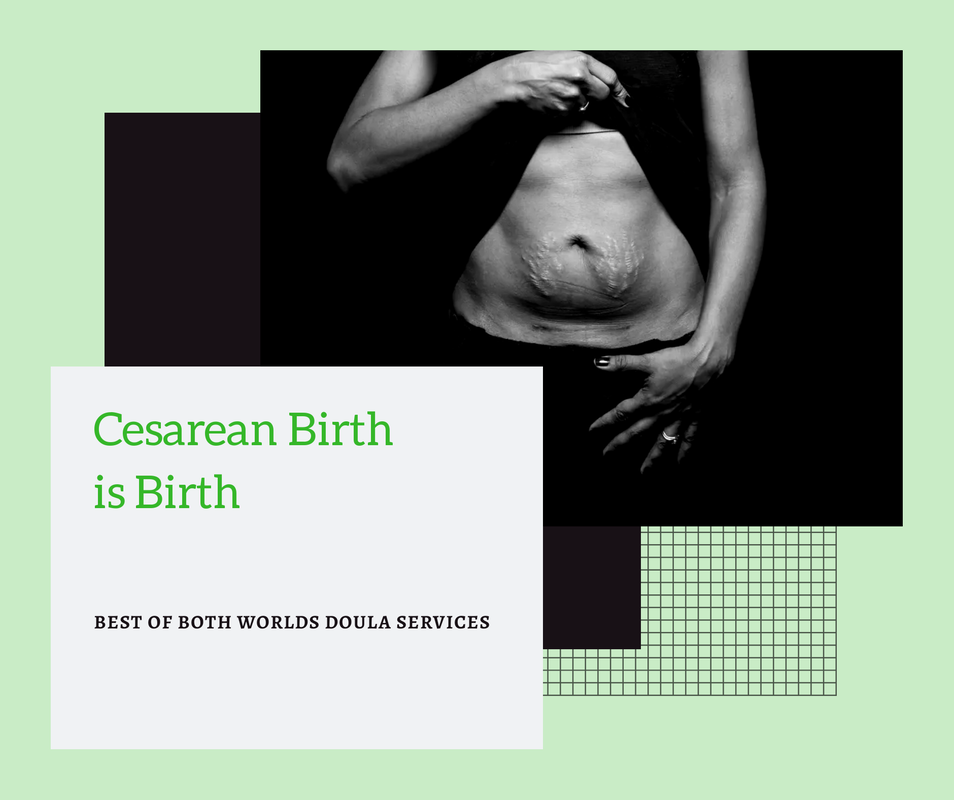
A cesarean birth is defined as the surgical delivery of a baby or babies. An incision is made in the abdominal wall and uterus and baby is guided out by the hands of doctors. Cesarean deliveries occur if a vaginal delivery is not possible or is unwanted by the birthing person. Cesarean sections are often referred to as a c-section, but it also called cesarean delivery. About one third of babies are born by way of c-section.
History
"Did you know that modern c sections were invented by African women— centuries before they were standard elsewhere?
Midwives and surgeons living around Lake Tanganyika and Lake Victoria perfected the procedure hundreds of years ago. When a baby couldn’t be delivered vaginally, these healers sedated the laboring mother using large amounts of banana wine. They tied the mother to the bed for safety, sterilized a knife using heat, and made the incision, acting quickly as a team to prevent excessive blood loss or the accidental cutting of other organs. The combination of sterile, sharp equipment and sedation made the procedure surprisingly calm and comfortable for the mother.
After the baby was delivered, antiseptic tinctures and salves were used to clean the area and stitches were applied. Women rarely developed infections, shock, or excessive blood loss after a cesarean section and the most common problem reported was that it took longer for the mother’s milk to come in (an issue that was solved with friends and relatives who would nurse the baby instead). In Uganda, C sections were normally performed by a team of male healers, but in Tanzania and DRC, they were typically done by female midwives.
The majority of women and babies survived this, and when questioned about it by European colonists in the mid-1800s, many people in Uganda and Tanzania indicated that the procedure had been performed routinely since time immemorial.
This was at a time when Europeans had only barely started to figure out that they should wash their hands before performing surgery, when nearly half of European and US women died in childbirth, and when nearly 100% of European women died if a C section was performed.
Detailed explanations of Ugandan C-sections were published globally in scholarly journals by the 1880s and helped the rest of the world learn how to save mothers and babies with minimal complications.
So if you’re one of the people who wouldn’t be alive today without a C-section, you have Ugandan surgeons and Tanzanian and Congolese midwives to thank for their contributions to medical science." Juniper Russo
History
"Did you know that modern c sections were invented by African women— centuries before they were standard elsewhere?
Midwives and surgeons living around Lake Tanganyika and Lake Victoria perfected the procedure hundreds of years ago. When a baby couldn’t be delivered vaginally, these healers sedated the laboring mother using large amounts of banana wine. They tied the mother to the bed for safety, sterilized a knife using heat, and made the incision, acting quickly as a team to prevent excessive blood loss or the accidental cutting of other organs. The combination of sterile, sharp equipment and sedation made the procedure surprisingly calm and comfortable for the mother.
After the baby was delivered, antiseptic tinctures and salves were used to clean the area and stitches were applied. Women rarely developed infections, shock, or excessive blood loss after a cesarean section and the most common problem reported was that it took longer for the mother’s milk to come in (an issue that was solved with friends and relatives who would nurse the baby instead). In Uganda, C sections were normally performed by a team of male healers, but in Tanzania and DRC, they were typically done by female midwives.
The majority of women and babies survived this, and when questioned about it by European colonists in the mid-1800s, many people in Uganda and Tanzania indicated that the procedure had been performed routinely since time immemorial.
This was at a time when Europeans had only barely started to figure out that they should wash their hands before performing surgery, when nearly half of European and US women died in childbirth, and when nearly 100% of European women died if a C section was performed.
Detailed explanations of Ugandan C-sections were published globally in scholarly journals by the 1880s and helped the rest of the world learn how to save mothers and babies with minimal complications.
So if you’re one of the people who wouldn’t be alive today without a C-section, you have Ugandan surgeons and Tanzanian and Congolese midwives to thank for their contributions to medical science." Juniper Russo
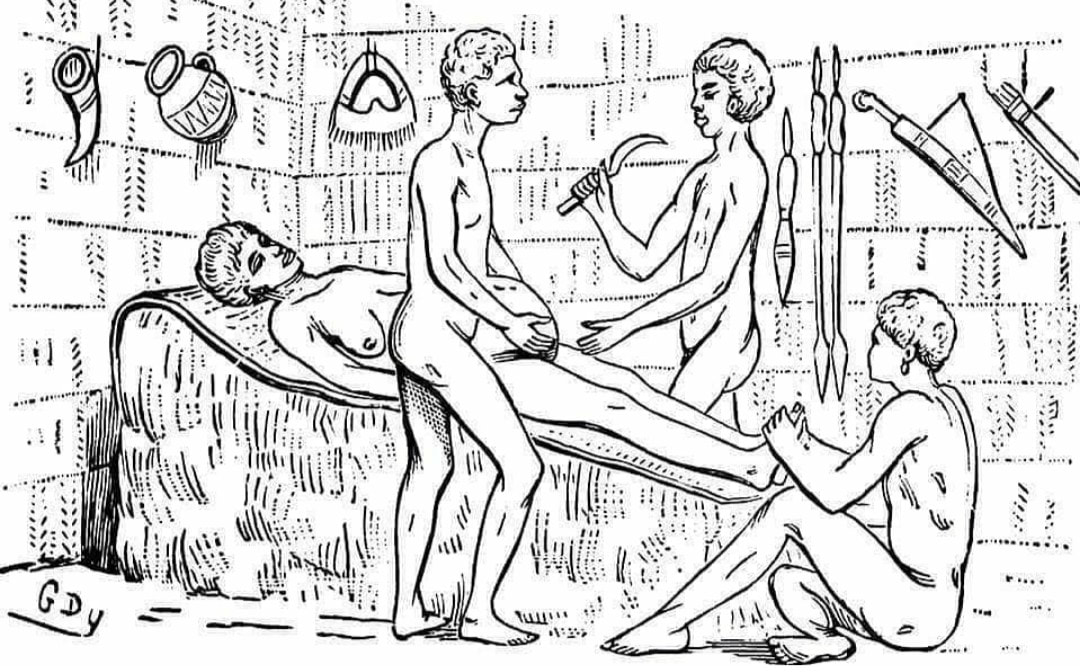
Successful Cesarean section performed by indigenous healers in Kahura, Uganda. As observed by R. W. Felkin in 1879 from his article "Notes on Labour in Central Africa" published in the Edinburgh Medical Journal, volume 20, April 1884, pages 922-930.
Reasons for a c-section:
Expectations: Your provider will explain the medical process of a cesarean to you so that you know what to expect during and after surgery. As your doula, I will prepare you for various birthing scenarios including emergency situations that could possibly lead to a cesarean delivery. If you want a planned c-section for whatever reason, we can still plan certain elements of your birth even though you will be in the operating room (sounds and music, lighting, doula and/or partner support, gentle c-section options, overall atmosphere, etc.) so that you can have the birth experience you desire. You can request that your birth doula join you in the OR during your surgery for extra support. Some hospitals and providers do not allow this and some have stipulations so be sure to talk to your provider, doula and the hospital or birthing center you where you will deliver. I also recommend watching a cesarean delivery video to help prepare you for your c-section as well. Your hospital stay will be longer due to your surgery (this is normally one extra day unless there were complications during your surgery). Again, because this is major surgery, you will want to plan you postpartum time accordingly to ensure a smooth and favorable recovery. You will also likely see your provider before a routine 6 week postpartum visit (could be as early as two weeks postpartum) to be sure you are doing okay physically and emotionally.
Risks: With any surgery, there will be risks. Infection (of the incision, uterus or other organs) and postpartum hemorrhage (blood loss) are the biggest risks regarding a c-section. Other risks include injury to other organs, side effects from the anesthesia, adhesions or scar tissue, maternal mortality and intense emotional responses or negative feelings about the birth experience. Birthing people who deliver by cesarean can have an increased risk for postpartum mood disorders. Risks for babies would include breathing problems, low APGAR scores and fetal injury. Be sure to discuss all possible risks with you medical provider especially is you are considered high risk, have certain medical conditions or you are a first time parent.
Recovery tips dos & donts:
VBACs: Having a vaginal birth after a c-section is very possible despite what most medical providers advise. Many factors including how long ago the surgery was performed and the state of your current pregnancy and overall health, may determine whether or not one can have a successful VBAC. The first priority is to find a provider that will be open to letting you try for a VBAC. Once you do that, hire a doula and map out two birth plans: one for VBAC and one for a c-section just in case. The right birth team, prenatal and managing expectations throughout pregnancy will be key
Repeat C-sections: If you have a repeat c-section then you likely know what to expect when it comes to delivery and postpartum recovery. However, if it has been more than 3 years since since you last gave birth and/or you have changed providers, make sure that your full medical history is noted (have your medical files transferred if possible) and definitely make sure they are a good fit it you want to try for a VBAC.
Postpartum Support: Having physical, emotional and mental support after having a baby is important, but more so when you have a c-section. Your movement will be limited. You core will be sore beyond belief and you may need help standing and walking for the. first couple of weeks. Normal things like laundry, cooking, cleaning and exercising will be put on hold so having an extra set of hands (or two) around would aid in your recovery and ensure you can focus on healing and bonding with baby. I recommend hiring a postpartum doula for continuity of care.
At the end of the day, yes, a cesarean section is major surgery. It is very beneficial to be prepared for one just in case because birth is so unpredictable. But, having a cesarean section is indeed birth and any birthing person who has had one will tell you that without a doubt.
- baby has developmental conditions
- baby’s head is too big for the birth canal
- the baby is coming out feet first (breech birth)
- early pregnancy complications
- mother’s health problems, such as high blood pressure or unstable heart disease
- mother has active genital herpes that could be transmitted to the baby
- previous cesarean delivery
- problems with the placenta, such as placental abruption or placenta previa
- problems with the umbilical cord
- reduced oxygen supply to the baby
- stalled labor
- delivering multiples
- birthing person's age or weight
- the baby is coming out shoulder first (transverse labor)
- Past trauma, birth or otherwise
- Parent requests scheduled c-section
Expectations: Your provider will explain the medical process of a cesarean to you so that you know what to expect during and after surgery. As your doula, I will prepare you for various birthing scenarios including emergency situations that could possibly lead to a cesarean delivery. If you want a planned c-section for whatever reason, we can still plan certain elements of your birth even though you will be in the operating room (sounds and music, lighting, doula and/or partner support, gentle c-section options, overall atmosphere, etc.) so that you can have the birth experience you desire. You can request that your birth doula join you in the OR during your surgery for extra support. Some hospitals and providers do not allow this and some have stipulations so be sure to talk to your provider, doula and the hospital or birthing center you where you will deliver. I also recommend watching a cesarean delivery video to help prepare you for your c-section as well. Your hospital stay will be longer due to your surgery (this is normally one extra day unless there were complications during your surgery). Again, because this is major surgery, you will want to plan you postpartum time accordingly to ensure a smooth and favorable recovery. You will also likely see your provider before a routine 6 week postpartum visit (could be as early as two weeks postpartum) to be sure you are doing okay physically and emotionally.
Risks: With any surgery, there will be risks. Infection (of the incision, uterus or other organs) and postpartum hemorrhage (blood loss) are the biggest risks regarding a c-section. Other risks include injury to other organs, side effects from the anesthesia, adhesions or scar tissue, maternal mortality and intense emotional responses or negative feelings about the birth experience. Birthing people who deliver by cesarean can have an increased risk for postpartum mood disorders. Risks for babies would include breathing problems, low APGAR scores and fetal injury. Be sure to discuss all possible risks with you medical provider especially is you are considered high risk, have certain medical conditions or you are a first time parent.
Recovery tips dos & donts:
- Take your time. Rest. Heal. Bond with baby.
- Let others take care of you AND the household duties.
- Set up an extended meal train that lasts 3 months minimum.
- Warm foods and beverages such as soups, broths, stews and teas will speed up recovery and replenish lots if vitamins and nutrients especially if you are nursing.
- Baby feeding-whether you are nursing or bottle feeding, have lots of pillows and cushions to assist positioning and comfort.
- Belly binding is another great way to aid healing.
- Extend your parental leave if needed to continue your healing and recovery.
VBACs: Having a vaginal birth after a c-section is very possible despite what most medical providers advise. Many factors including how long ago the surgery was performed and the state of your current pregnancy and overall health, may determine whether or not one can have a successful VBAC. The first priority is to find a provider that will be open to letting you try for a VBAC. Once you do that, hire a doula and map out two birth plans: one for VBAC and one for a c-section just in case. The right birth team, prenatal and managing expectations throughout pregnancy will be key
Repeat C-sections: If you have a repeat c-section then you likely know what to expect when it comes to delivery and postpartum recovery. However, if it has been more than 3 years since since you last gave birth and/or you have changed providers, make sure that your full medical history is noted (have your medical files transferred if possible) and definitely make sure they are a good fit it you want to try for a VBAC.
Postpartum Support: Having physical, emotional and mental support after having a baby is important, but more so when you have a c-section. Your movement will be limited. You core will be sore beyond belief and you may need help standing and walking for the. first couple of weeks. Normal things like laundry, cooking, cleaning and exercising will be put on hold so having an extra set of hands (or two) around would aid in your recovery and ensure you can focus on healing and bonding with baby. I recommend hiring a postpartum doula for continuity of care.
At the end of the day, yes, a cesarean section is major surgery. It is very beneficial to be prepared for one just in case because birth is so unpredictable. But, having a cesarean section is indeed birth and any birthing person who has had one will tell you that without a doubt.

 RSS Feed